Overview
Behavioral health providers manage complex services that require detailed documentation, coordinated care teams, and strict compliance with payer and regulatory requirements. As behavioral health services expand across community care, IDD programs, and integrated health systems, many organizations are turning to specialized software to support their work.
Behavioral health software helps agencies document services, track treatment progress, manage scheduling, and maintain compliance with Medicaid and insurance programs. Instead of juggling paper notes, spreadsheets, and disconnected systems, providers can centralize their operations in one platform.
Defining behavioral health software
Behavioral health software is a digital platform designed to support organizations delivering mental health, addiction treatment, and behavioral support services. These systems help providers manage clinical records, treatment plans, scheduling, billing, and reporting.
Unlike general healthcare software, behavioral health platforms are built to support therapy sessions, behavioral observations, long term treatment plans, and progress monitoring.

Who uses these systems
Behavioral health software is used by a wide range of providers including mental health clinics, community behavioral health programs, substance use treatment providers, and IDD organizations that support individuals with behavioral health needs.
These providers rely on software to manage both clinical care and operational requirements such as billing and compliance.
Key features
Most behavioral health software platforms support several core functions including documentation, treatment planning, scheduling, reporting, and billing. Many also include tools for outcome tracking and team communication.
These capabilities help agencies maintain accurate records while supporting coordinated care across multiple staff members.
Supporting coordinated care
Behavioral health services often involve multiple professionals including therapists, psychiatrists, case managers, and support staff. Software platforms allow teams to share information, review documentation, and coordinate treatment more effectively.
This coordination improves continuity of care and reduces communication gaps.

Compliance and reporting
Behavioral health providers must meet strict documentation and reporting requirements for Medicaid and other payers. Software helps ensure records are complete, organized, and accessible for audits or reporting.
Agencies can also generate reports that demonstrate progress and service outcomes.
Giv Supports Providers
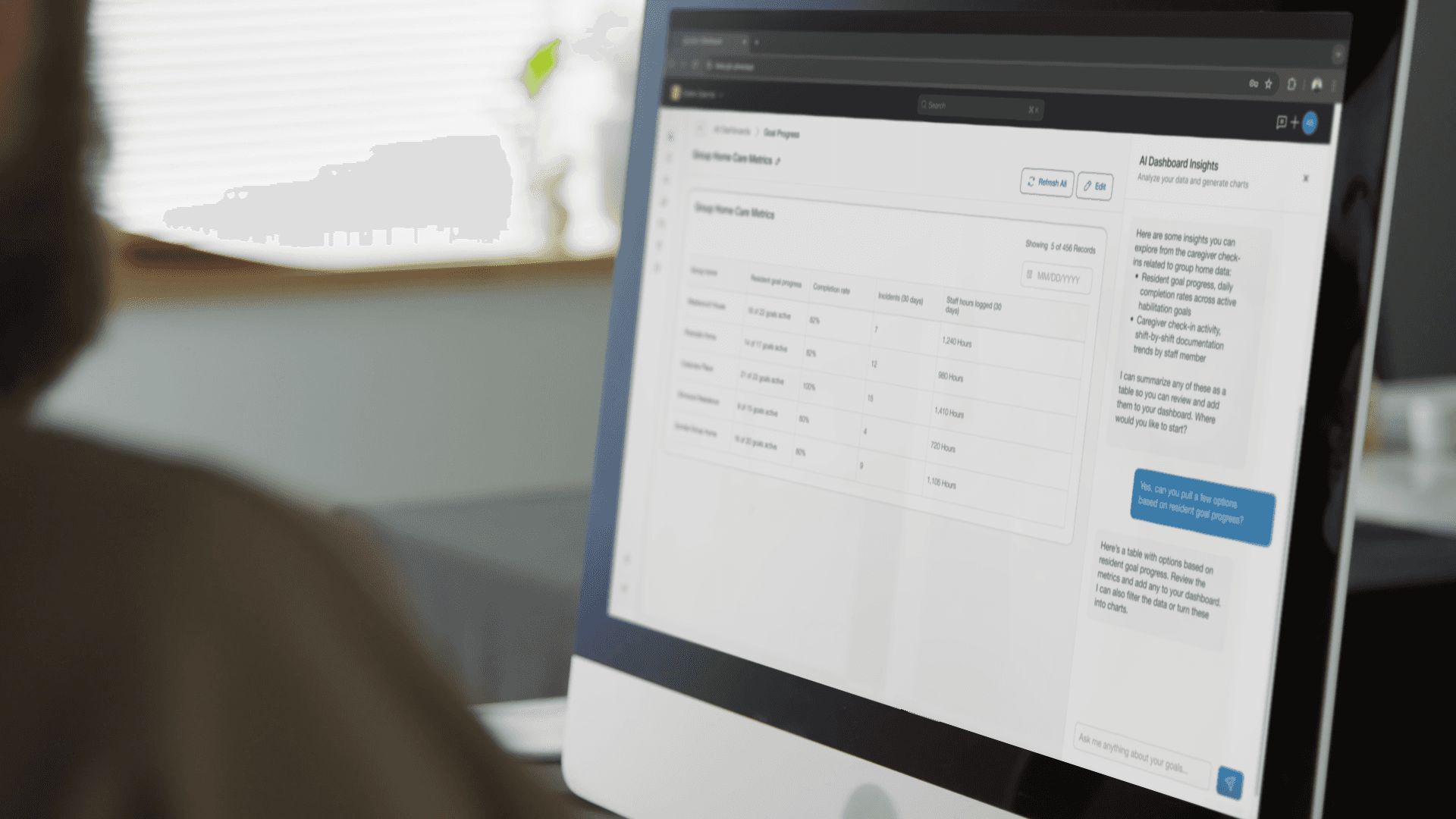
Giv helps behavioral health and IDD providers manage documentation, reporting, and team coordination in one platform. With real time documentation tools, structured workflows, and clear reporting, agencies can maintain compliance while reducing administrative burden. Try Giv out for free with our walkthrough.